Local Dishes Worth Knowing
Where taste tells the story.
Steaming soups, robust cheeses, humble sweets full of soul: the dishes of the Trentino tradition are not simple recipes but fragments of an ancient knowledge handed down in the slow gestures of mountain cooking. Every preparation, from bread soups to braised meats, was born of what the land and the summer pastures could give — transformed with care, thrift and ingenuity.
These dishes tell of the seasons, of work in the fields, of village feasts and of the silences of winter. Today they live again on contemporary tables with renewed pride, becoming ambassadors of a culinary identity that needs no frills to move you.
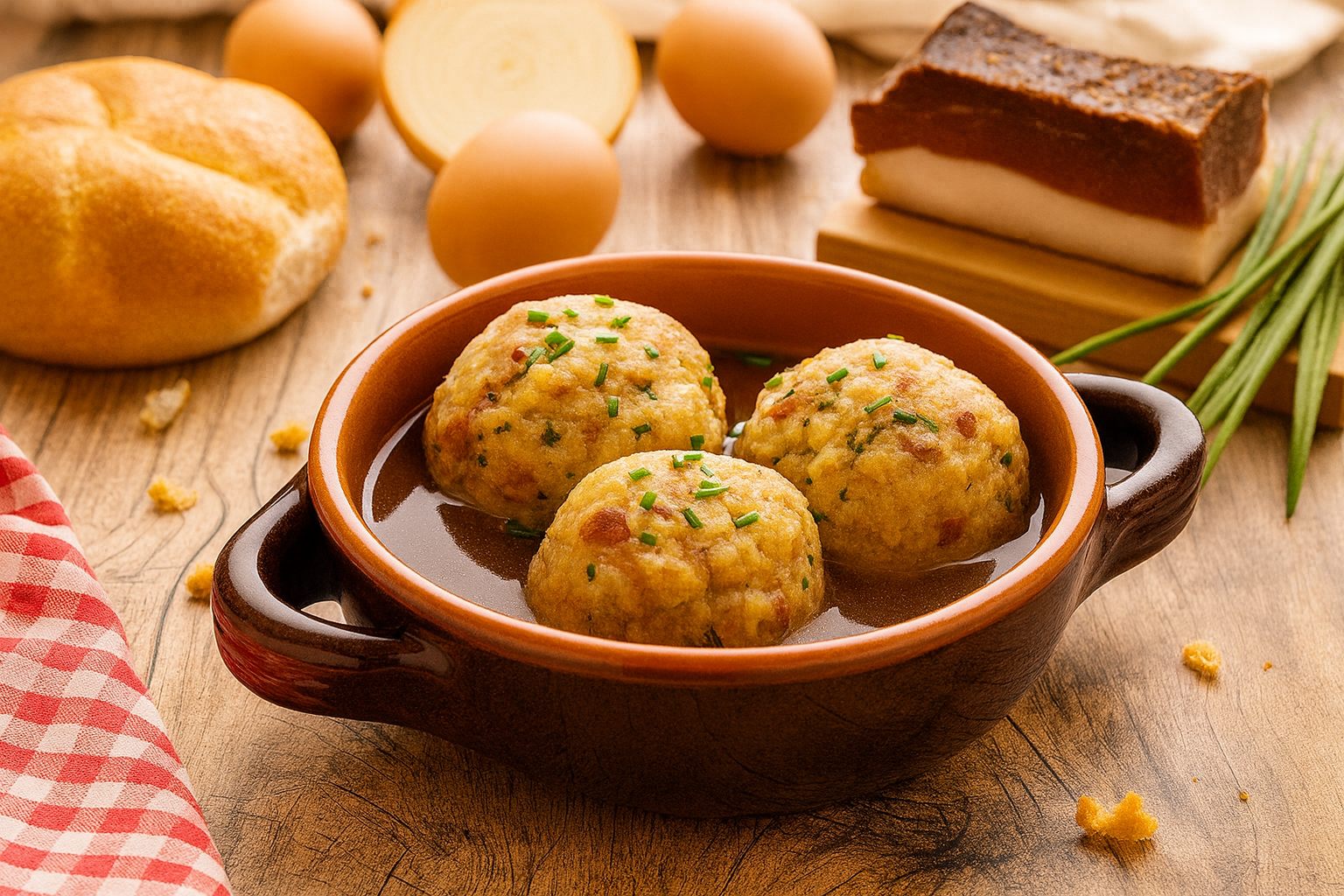
Canederli Trentini (bread dumplings)
Bread, tradition and country wisdom
Born in the heart of the Alps and found throughout Trentino-Alto Adige, canederli (in German Knödel) are one of the most representative dishes of humble mountain cooking. Farming families made them to use up stale bread and to make the most of simple ingredients such as eggs, herbs and local cheeses. The best-known version is made with speck, but there are many others: with spinach, with liver, with cheese, or even sweet.
Today canederli are a culinary symbol of the Trentino valleys: comfort food that speaks of conviviality, age-old gestures and authentic flavours.
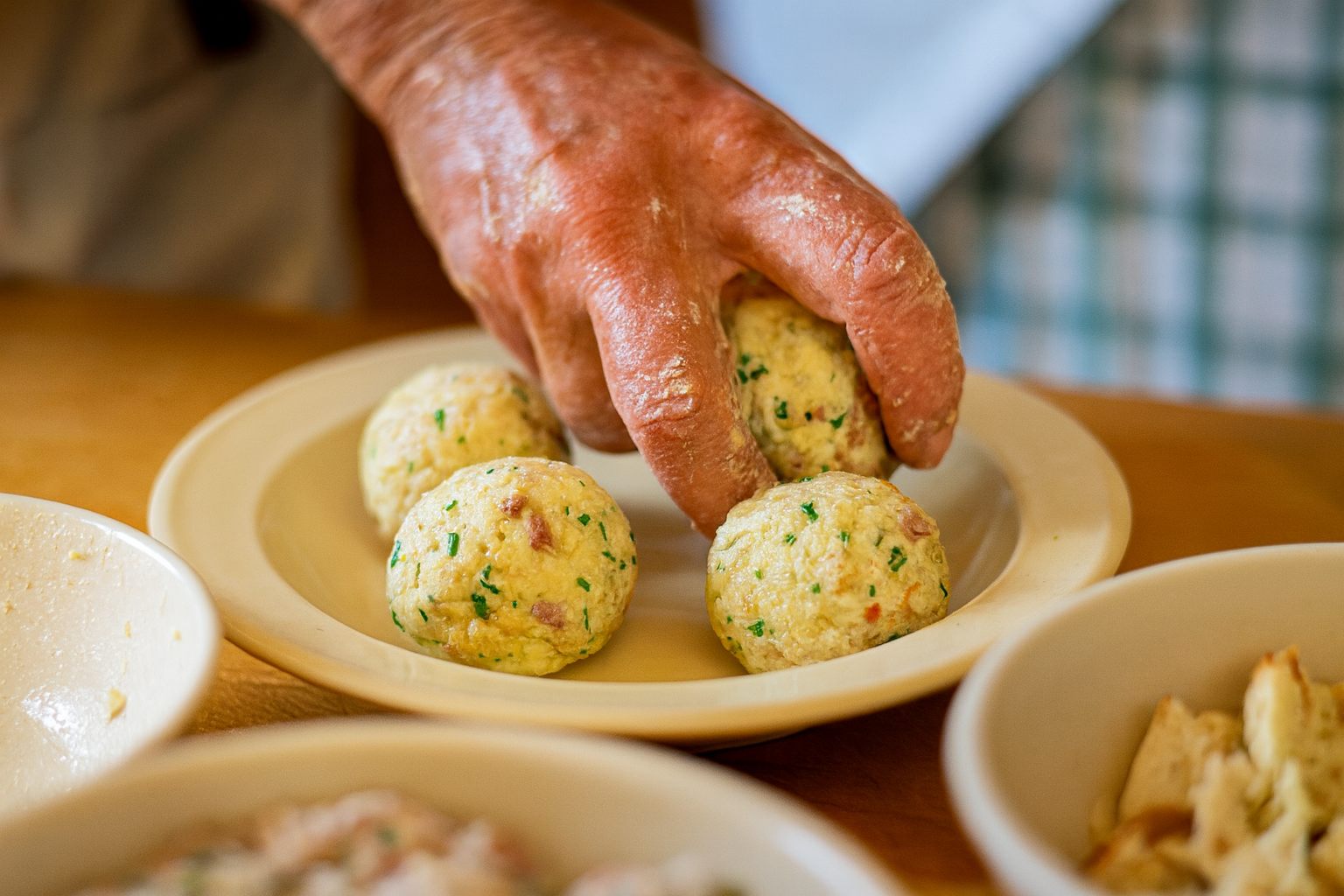
Traditional recipe for Canederli with speck
Ingredients (serves 4)
- 250 g stale bread, diced
- 150 ml milk
- 2 eggs
- 100 g speck, diced
- 50 g onion (optional)
- 30 g butter
- 2 tablespoons flour
- 2 tablespoons grated cheese (Trentingrana)
- chopped fresh parsley, to taste
- salt and pepper, to taste
- vegetable or meat stock (for cooking)
Method
- Soak the stale bread in the milk and leave to stand for 15-20 minutes.
- Fry the chopped onion in the butter, then add the diced speck.
- Add the eggs, the speck and onion mixture, the cheese, the flour, the parsley, salt and pepper to the bread. Knead until the mixture holds together.
- Shape into balls the size of an apricot (6-8 cm).
- Cook in simmering stock over a low heat for about 15 minutes, until they rise to the surface.
- Serve in the hot stock, or drained with melted butter, chives and cheese.
Time: ~45 minutes (including standing) · Difficulty: easy to medium · Cost: low
Tortel di Patate (potato fritter)
The gold of the earth turned into something crisp and good
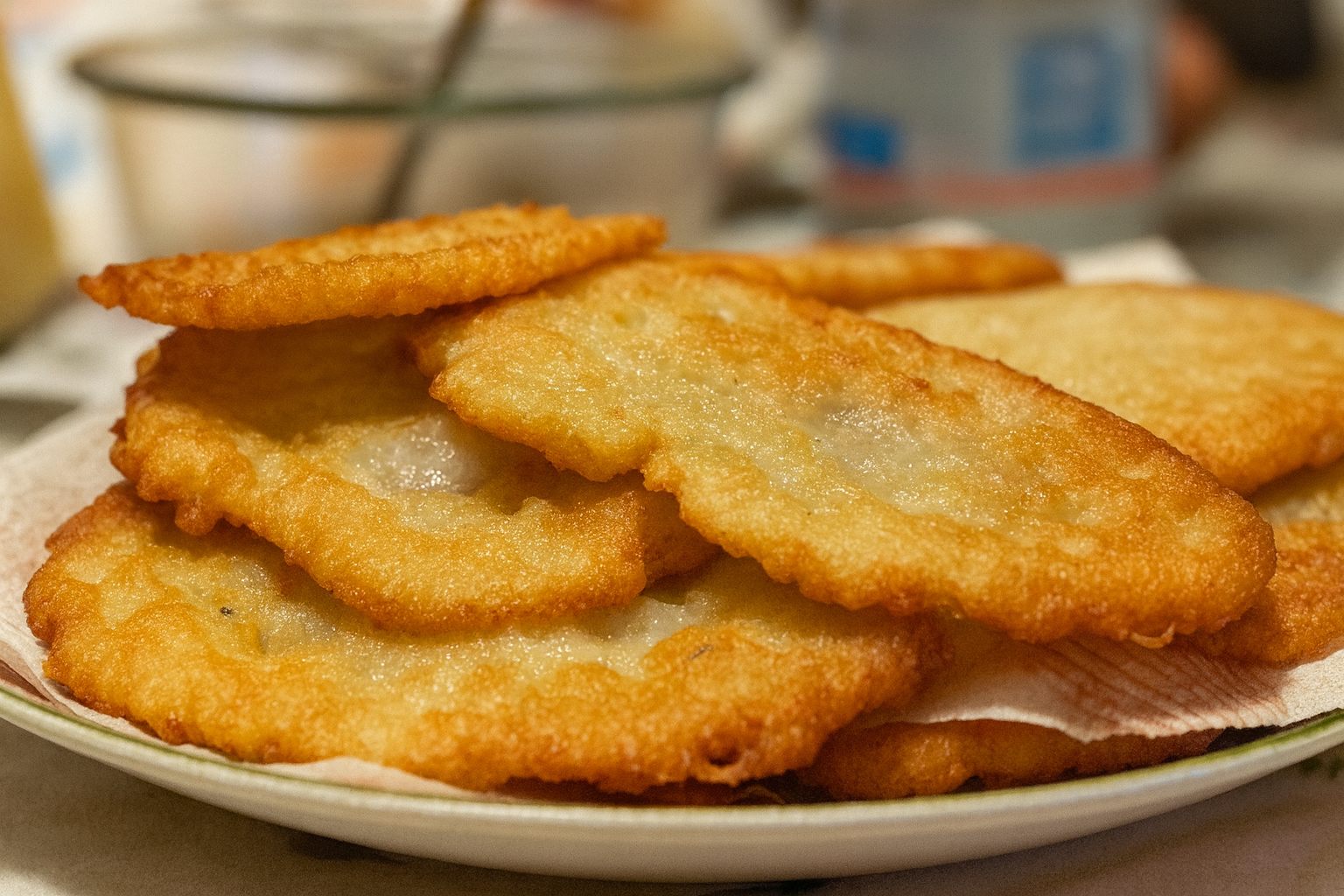
A signature dish of home cooking in the Val di Non and in many Trentino valleys, the Tortel di patate began as a humble country recipe, simple and filling. Made with just a few ingredients — grated potatoes, flour, oil or lard — it is a perfect example of how mountain cooking turns simplicity into flavour.
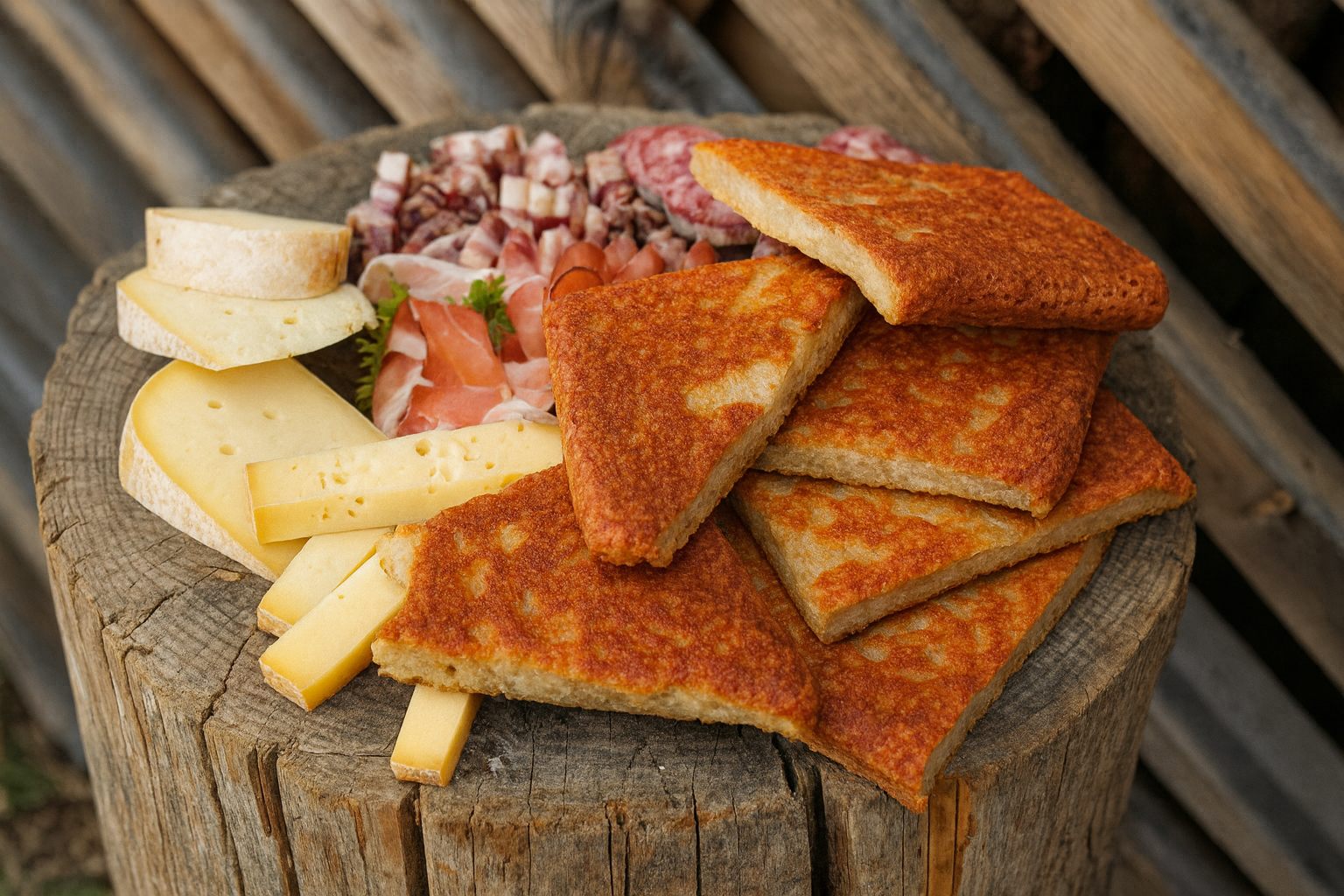
Traditionally served with cured meats, cheeses, white cabbage or beans, the tortel is celebrated today at village festivals and in traditional restaurants as an authentic symbol of the area.
Recipe
Ingredients (serves 4)
- 1 kg floury potatoes
- 2 tablespoons plain flour
- salt, to taste
- vegetable oil for frying (or lard)
Method
- Peel and finely grate the raw potatoes, then squeeze out the excess water.
- Add the flour and a pinch of salt, and mix until the mixture holds together.
- Heat plenty of oil and drop in spoonfuls of the mixture, flattening them slightly.
- Brown on both sides, then drain on kitchen paper.
Time: 30 minutes · Difficulty: easy · Cost: low
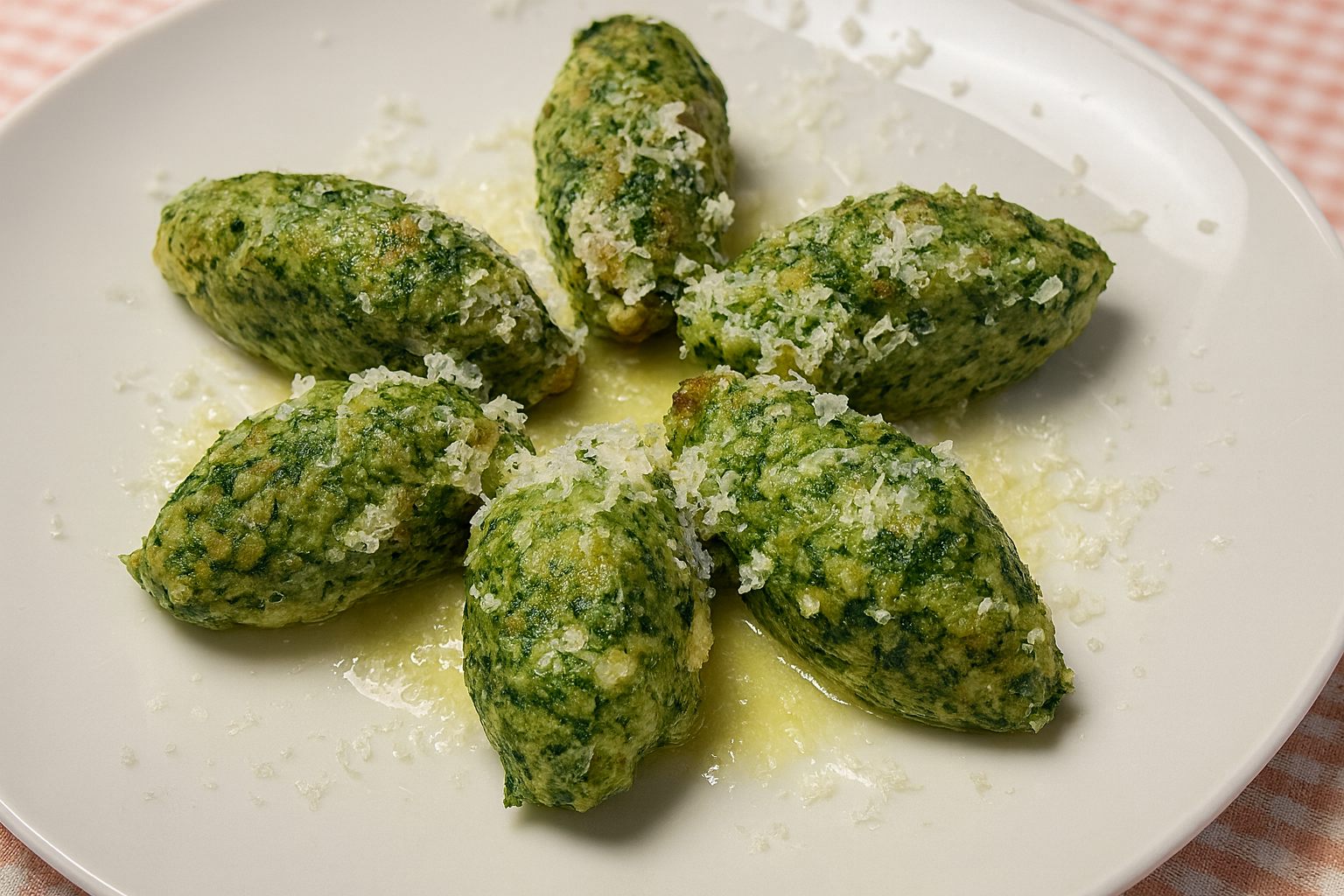
Strangolapreti alla Trentina (bread and spinach gnocchi)
Bread, spinach and country invention
A signature dish of Trentino's popular cooking, with medieval origins. According to legend, its curious name — literally 'priest stranglers' — comes from the greed of clergymen who, loving the dish, risked choking by eating it too fast.
They are soft dumplings made from stale bread and spinach, dressed with melted butter, sage and cheese: a recipe born of wasting nothing, and today prized on gourmet menus too.
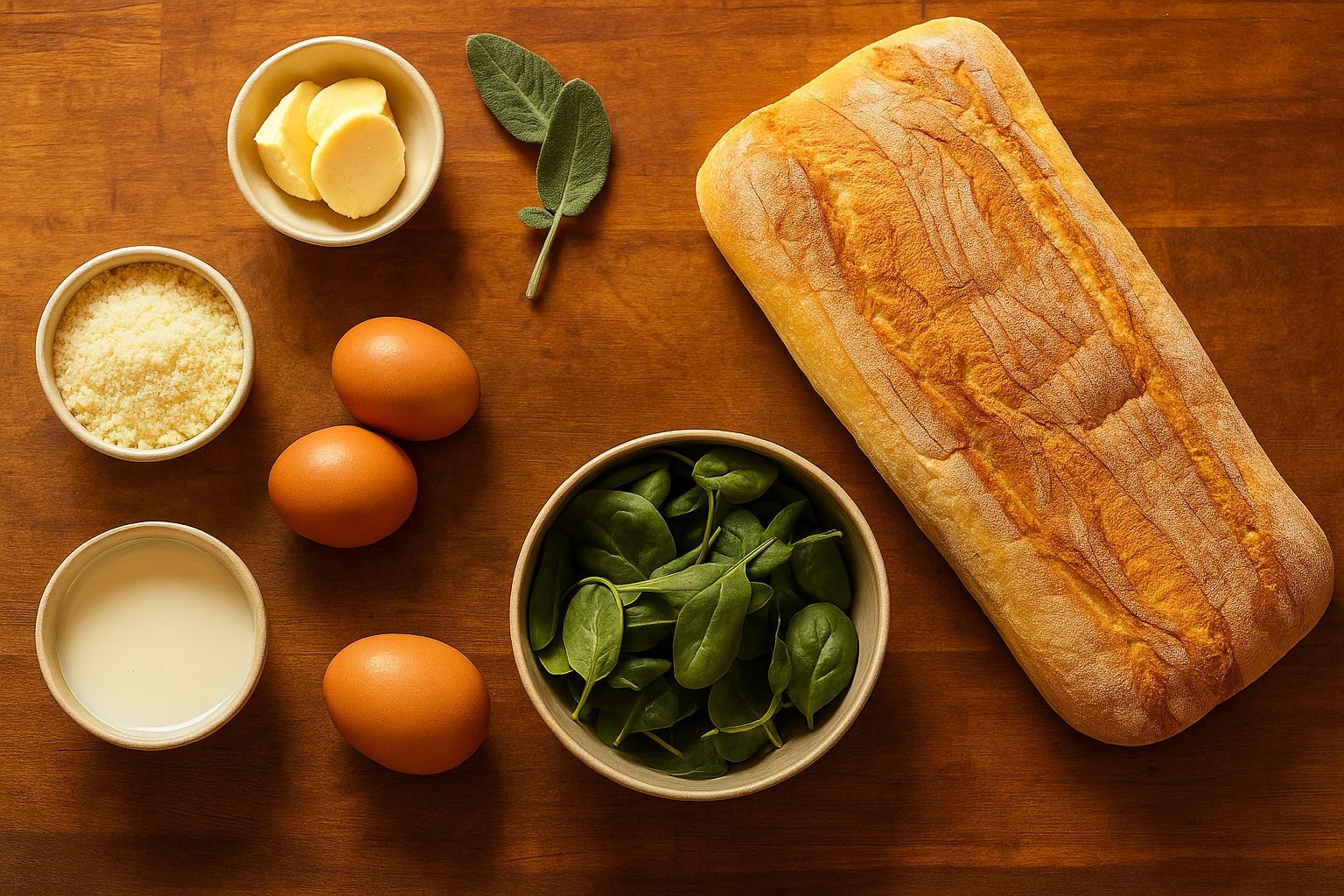
Recipe
Ingredients (serves 4)
- 300 g stale white bread
- 300 g spinach, boiled and squeezed dry
- 200 ml milk
- 2 eggs
- 2 tablespoons flour
- 50 g grated cheese (Trentingrana)
- salt and nutmeg, to taste
- melted butter and sage to dress
- extra cheese to serve
Method
- Soak the diced bread in the milk for about 20 minutes.
- Boil, squeeze dry and chop the spinach, then add it to the bread.
- Add the eggs, flour, cheese, salt and nutmeg; mix until smooth.
- Shape into oval or round dumplings the size of a walnut.
- Cook a few at a time in boiling salted water, lifting them out with a slotted spoon as soon as they rise to the surface.
- Dress with sage butter and grated cheese.
Time: 40 minutes · Difficulty: easy · Cost: low
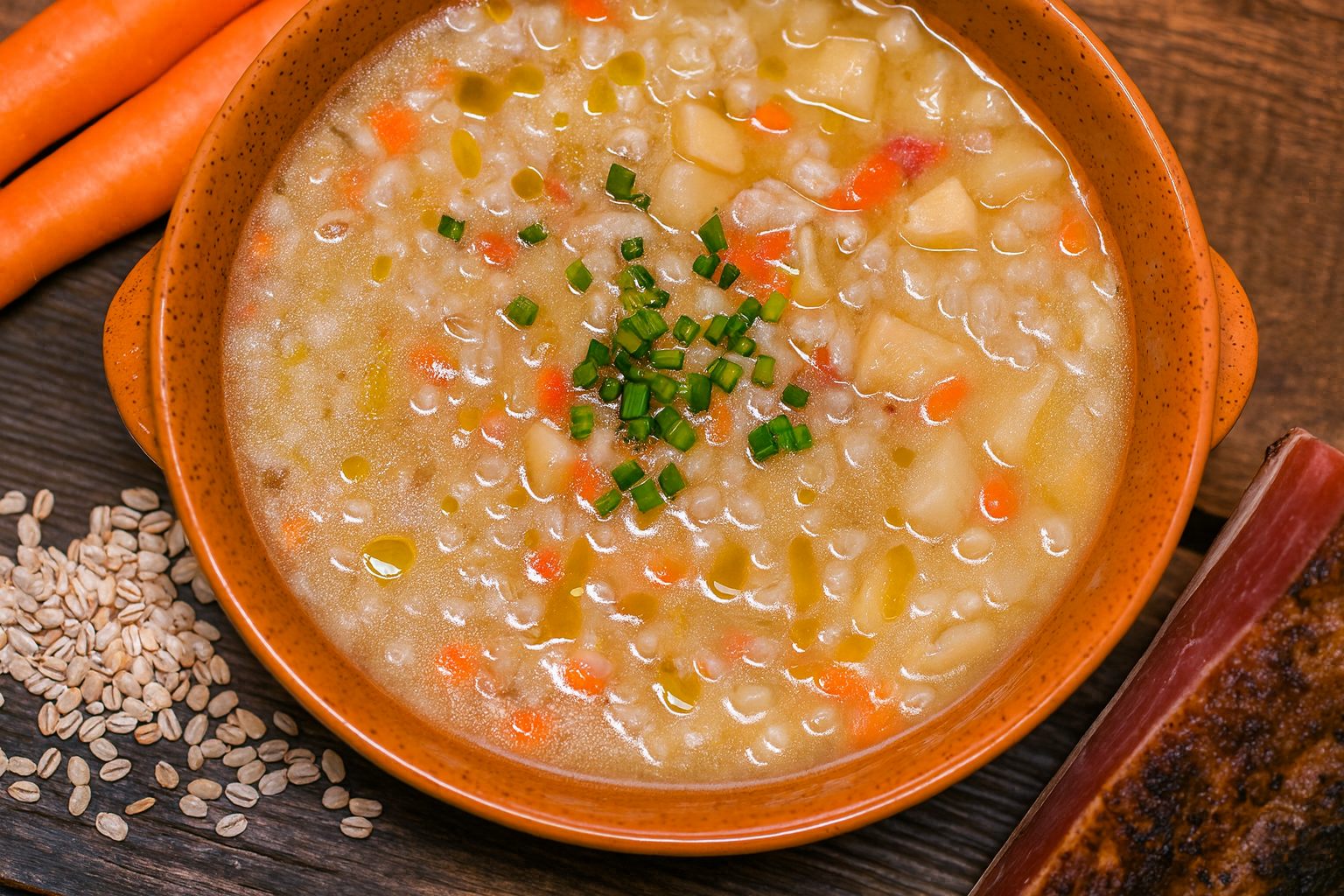
Zuppa d'Orzo alla Trentina (barley soup)
The comfort food of the Alpine valleys
A symbol of warmth and conviviality, Zuppa d'Orzo is one of the most authentic dishes of the Trentino country tradition. Born as a one-pot meal to face harsh mountain winters, it combines pearl barley, vegetables from the garden and speck, often finished with a drizzle of oil and local cheese.
Today it takes pride of place on many traditional tables and is also reinterpreted in vegetarian form, while keeping its rustic, honest character.
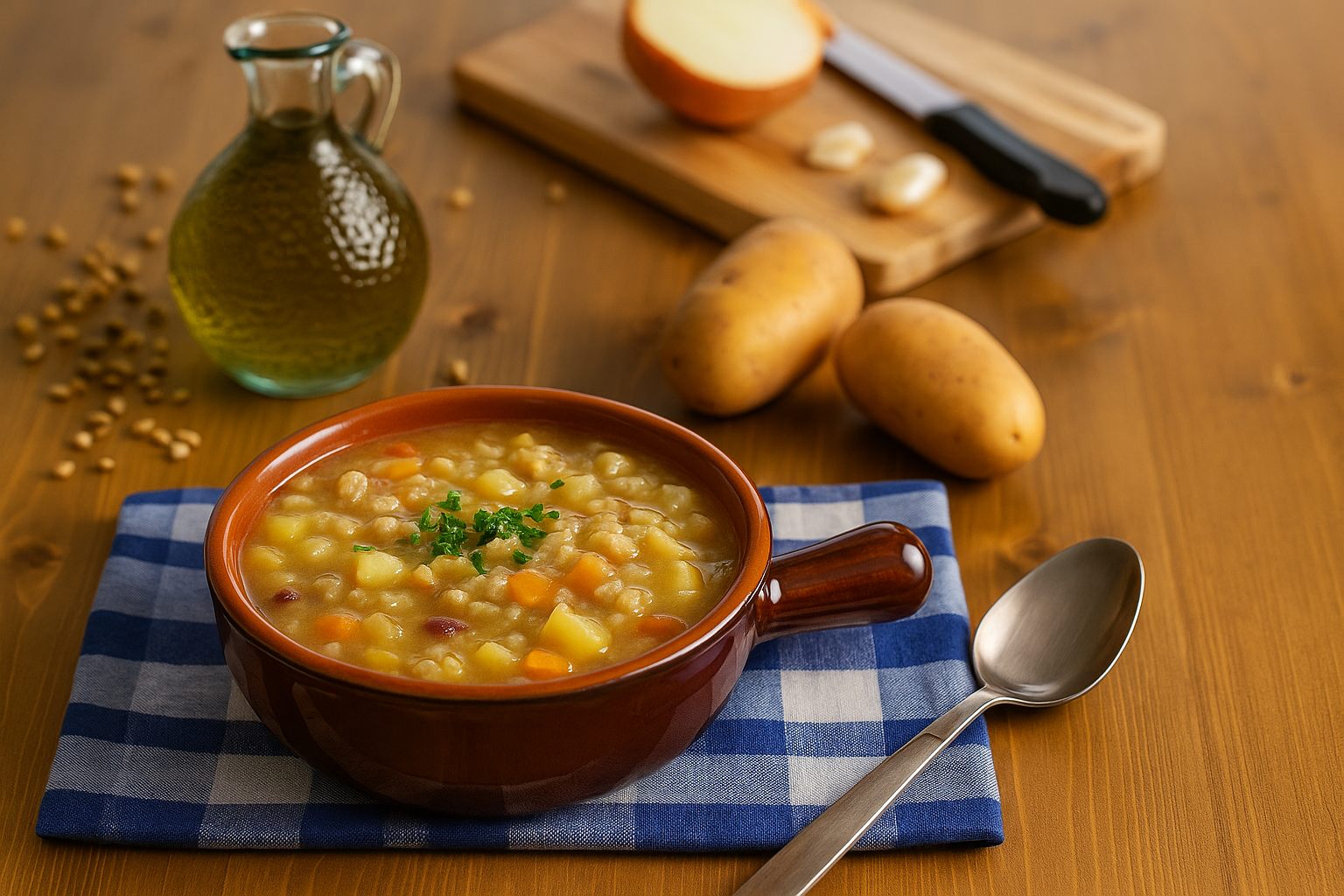
Recipe
Ingredients (serves 4)
- 200 g pearl barley
- 1 carrot
- 1 stick of celery
- 1 onion
- 150 g potatoes
- 100 g speck or smoked pancetta (optional: omit for the vegetarian version)
- 1 l vegetable stock
- 1 tablespoon extra virgin olive oil
- salt and pepper, to taste
- fresh parsley (optional)
- grated Parmesan (optional)
Method
- Rinse the barley (if not pearl barley, soak for 2-3 hours).
- Dice the carrot, celery, onion and potatoes; cut the speck into strips.
- Fry the speck with the onion, celery and carrot until golden.
- Add the potatoes and barley, then cover with hot stock.
- Simmer for about 40 minutes over a low heat, adjusting salt and pepper.
- Finish with a drizzle of oil, parsley and, if you like, Parmesan.
Time: ~1 hour · Difficulty: medium · Cost: low
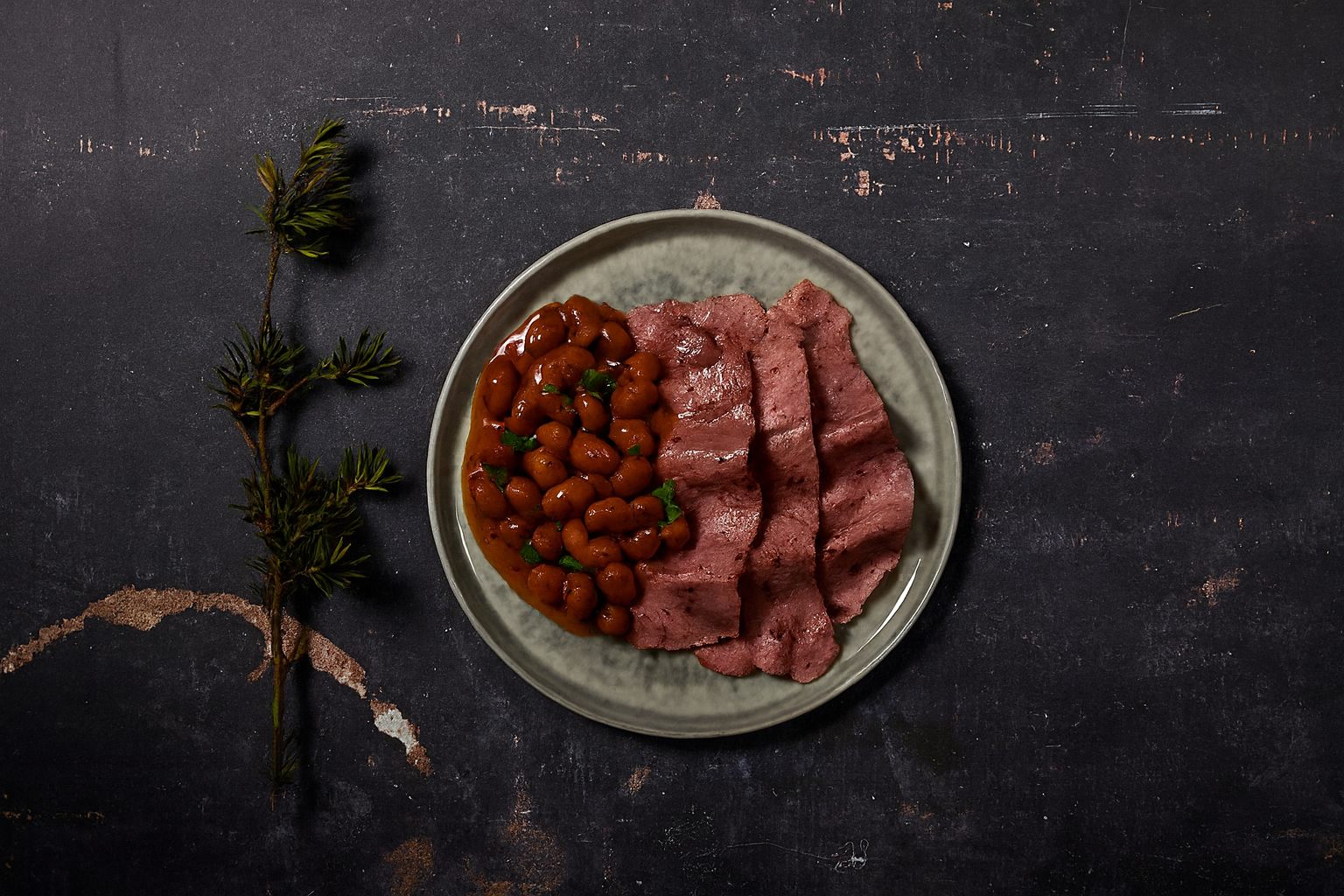
Carne salada con fasòi (salt-cured beef with beans)
A Trentino classic of flavour, history and tradition
Born in the valleys of south-western Trentino (Arco, Tenno, Riva del Garda, Vallagarina), carne salada has ancient origins tied to preserving beef through the winter. From the fifteenth century onwards this salting technique was used by farming families so that nothing went to waste.
Today it is a recognised speciality, a Slow Food Presidium, served raw as a carpaccio or seared in the pan, accompanied by fasòi (beans): a country pairing that today wins over gourmet tables too.
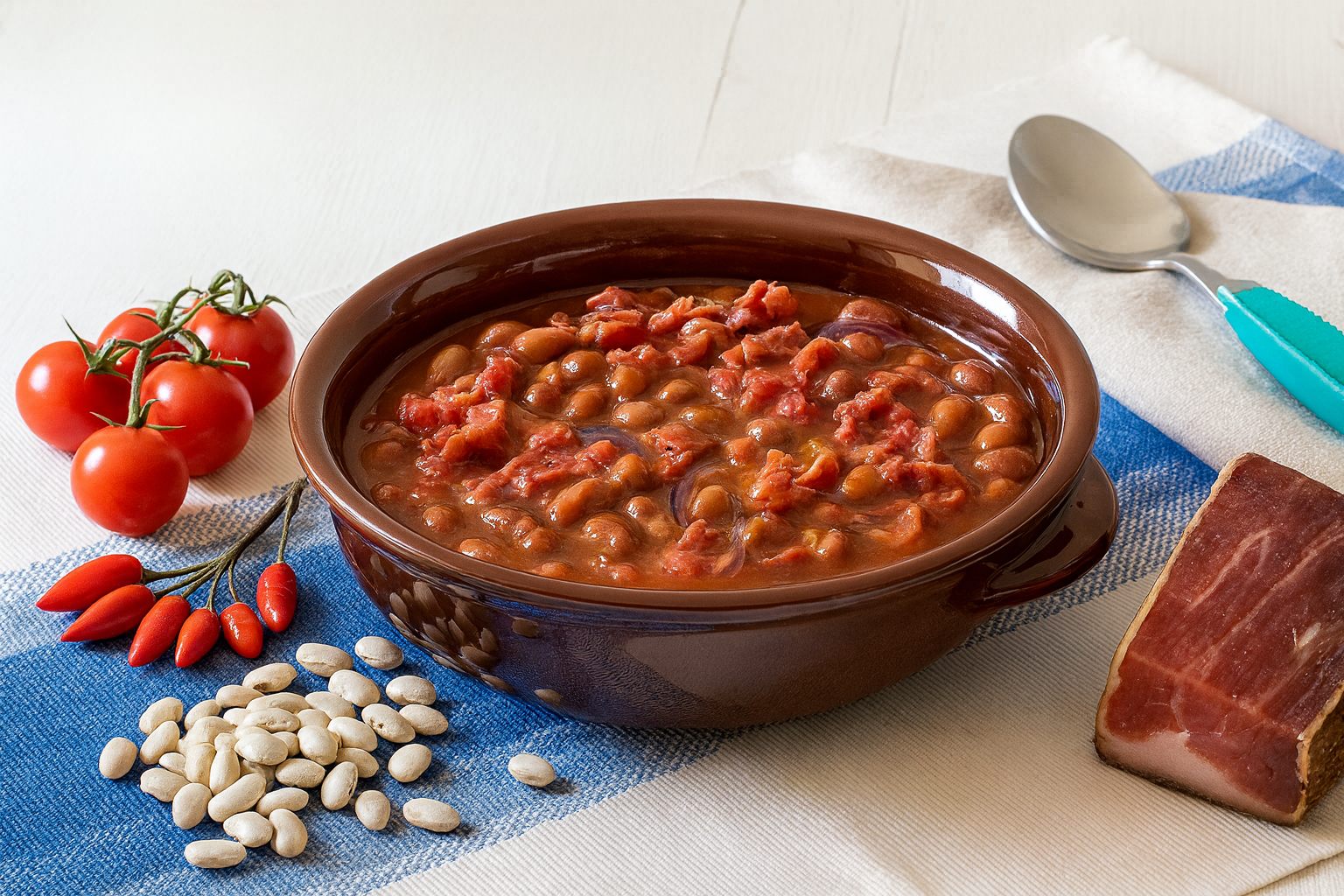
Recipe
Ingredients (serves 4)
- Carne salada: 800 g sliced carne salada (from butchers or local producers)
- 2 sprigs of fresh rosemary
- 1 unpeeled garlic clove
- 1 tablespoon extra virgin olive oil
- freshly ground black pepper (optional)
- Beans: 300 g dried borlotti beans (or 500 g already cooked)
- 1 small white onion
- 1 bay leaf
- salt to taste and extra virgin olive oil
Method
- Beans: soak for 12 hours, rinse, then cook with the onion and bay leaf for about 1 hour 30 minutes, until soft but still whole. Salt at the end of cooking, leave to stand for 10 minutes and dress with raw oil.
- Meat: heat the oil with the rosemary and garlic in a pan or on a hot griddle, remove the garlic, then sear the slices for 30-40 seconds per side (browned outside, tender inside).
- Serve the meat hot alongside the beans, with a drizzle of raw oil and black pepper. Accompany, if you wish, with rustic bread, polenta di Storo or seasonal vegetables.
Total time: 12 h soaking + 1 h 30 cooking the beans + 10 min for the meat · Difficulty: easy · Cost: medium (artisan product)
Have questions or want to know more?
You can contact us directly through the online form or write to info@mediatecadeipopoli.it.
“History is waiting for you. Come and live it first-hand.”